Forged betrothal papers for Isobel and DeLisle
When You Were MineThe Forged betrothal papers for Isobel and DeLisle turn a private act of coercion into evidence of a wider scheme: Rupert Davenport sought to present Isobel as promised to DeLisle so that her wealth could be reached through a marriage she had refused. The paper’s missing signature is central. Rupert and DeLisle had signed it, but Isobel had not; what was meant to constrain her instead became a traceable record of their plan.
The document and its circumstances
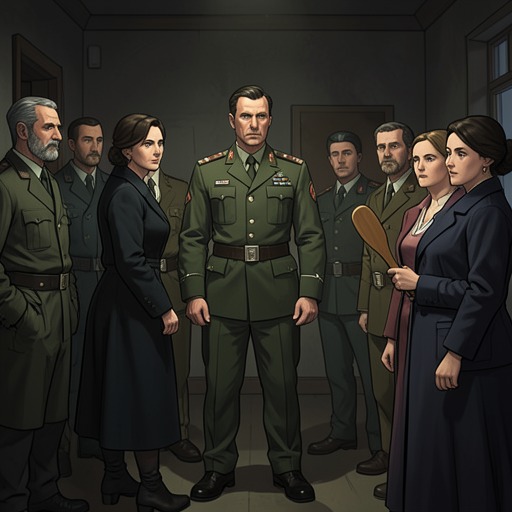
The papers emerge from the upheaval that followed Rupert’s arrival at Willowbrook Hall. Isobel had spent two and a half weeks with Elspeth when Rupert came to remove her, announcing that Peter Davenport had died and that he was now Isobel’s guardian. Isobel was stunned by the report and had no way to verify it. Rupert gave her little time to pack, said Willowbrook Hall could not be his concern, and threatened that Elspeth should be sent to an asylum if Isobel did not leave. Isobel agreed to go only after securing his promise that Elspeth could remain there for the time being. She also insisted that Kitty accompany her as her lady’s maid.
The claim of guardianship supplied the coercive setting in which Rupert could try to dictate Isobel’s future. The family’s account of Gosport Hall makes the situation especially pointed: the remote hunting lodge had been inherited by Isobel, although it had remained closed and unused since the family stopped visiting after her mother’s death. Isobel’s own property was thus part of the backdrop to her removal and confinement, while Rupert presented himself as the authority entitled to decide what happened to her.
A refused signature and a financial purpose
Isobel recalled the papers only after writing an account of the events that had driven her onto the streets. Setting those experiences down in sequence helped her recover a detail she had forgotten: Rupert and DeLisle had tried to force her to sign a betrothal document naming DeLisle as her intended. She refused. Although she did not recount the beating in that conversation, the others’ knowing looks made clear that they understood the consequences she had suffered for resisting.
The document already bore the signatures of Rupert and DeLisle when Isobel saw it. Rupert repeatedly put it before her, but she recognized that they still needed her signature to make it a legal document. Isobel connected the proposed betrothal to the false report of Peter’s death and to Rupert’s lack of funds. In her reasoning, a paper identifying DeLisle as her intended, with a dowry sum Rupert could not supply himself, would expose the pair’s plans for her wealth. Peter sharpened the point: their object was not simply to arrange a match but to obtain access to Isobel’s money.
Isobel explained that the paper could help secure a special license and force her into marriage, even though the funds would not be released to Rupert and DeLisle until after she married. She argued that Rupert knew he was not her guardian and that, without her signature, he could not force her to do anything. These are the characters’ claims about the document’s legal force and their circumstances; the narrative makes the crucial distinction between the authority Rupert asserted and the consent Isobel withheld. The unsigned paper records an attempted shortcut from false guardianship to a marriage designed around money.
Recovery and exposure
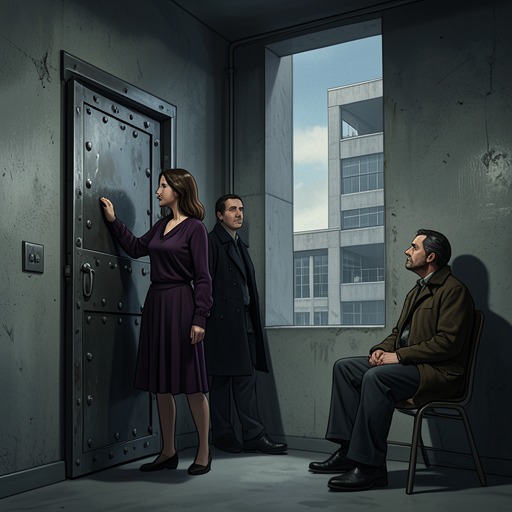
Isobel’s recollection changes the search for evidence from a general investigation into a hunt for a particular document. She expected Rupert to keep it with him rather than leave it unattended. When she and Dominic Cavendish later searched Rupert’s house, they found his trunk in the last room they entered. They looked through the writing table, clothes press, and bedside table before searching the drawers. Dominic then tapped Isobel’s shoulder and showed her a roll of papers. Reading what she could see in the gloom, she recognized two documents she believed would seal Rupert’s fate.
The recovery briefly interrupts the danger and secrecy of the break-in with relief and triumph. Yet the search had seemed almost too easy, and Isobel wondered whether they had missed something as she and Dominic slipped out through the kitchen door. They hid in the shrubbery until the candlelight vanished from an upper window, then retraced their route across the gardens to the protection of the trees. The papers matter not as an abstract allegation but as physical evidence taken from Rupert’s own house, obtained at the risk of being discovered.
The paper as evidence against Rupert
The document’s significance becomes explicit when Dominic challenges Rupert over the validity of any marriage or betrothal papers he might produce. Rupert reacts with a narrow-eyed glare at the mention of betrothal documents. Dominic recognizes that the subject has struck home; Rupert then realizes that the deception surrounding the marriage has been uncovered and accuses Dominic of breaking into his house. His response does not itself establish every detail of the scheme, but it links the recovered evidence to the secret Dominic has exposed.
Peter’s intervention supplies a competing account of who had authority over Isobel. He states that he was her legal guardian when the purported marriage took place and had never given permission for her to marry anyone except Lord Havistock. He also says that papers witnessed by magistrates had recorded Isobel’s betrothal to Dominic some three years earlier. Against that earlier arrangement, Rupert and DeLisle’s attempt to secure Isobel’s signature looks not like an ordinary engagement but an effort to impose a rival claim on a woman Peter says was not free to wed them.
Narrative significance
The papers bring together the story’s recurring conflicts over guardianship, consent, reputation, and inheritance. Rupert’s authority depends on Isobel believing Peter is dead; the proposed betrothal turns that deception into a means of controlling her marriage and, through it, access to her fortune. Isobel’s refusal prevents the paper from functioning as its authors intended, while her later recollection transforms the same document into evidence she can use against Rupert.
Its force therefore lies in both what it contains and what it lacks. The signatures of Rupert and DeLisle record their part in the arrangement; Isobel’s absent signature marks the limit of their control. When she remembers the document, identifies its financial purpose, and helps recover the papers from Rupert’s house, she moves from being the target of a scheme to an active participant in exposing it.